

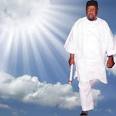
Dim Ikemba
since
the end of the civil war, corruption-
induced poverty has killed more than
20 times the number of Nigerians that
died in the civil war. Ordinary Nigerians
know their true leaders. And Ojukwu
was one –
Ojukwu never fought against Nigeria;
he fought against injustice and
barbarism. He was the quintessential
servant leader who used his position to defend his people when they
were facing imminent war.
Neither did he fight to kill his
compatriots from the other side; he
fought in self-defence. If he had fought like today’s
terrorists (who massacre innocent men,
women and children in places of
worship, markets and in their homes),
perhaps, the war would have ended differently. It is on record that not a single shot was fired in d North or South even though Ojukwu had the resources to order such attacks in those regions.
when the Soviets wanted to join
the war if only Biafra would give them
oil later, Ojukwu refused because he
did not want Nigeria to become a
theatre of war for the then
superpowers.
If he had, the civil war would not have
ended the way it did: millions more
would have been killed; more cities
would have been destroyed; and Biafra
would have survived. Perhaps, even
those that claimed to be generals,
patriots and statesmen after the war
would not have survived it.
On a scale, therefore, Ojukwu is head
and shoulders above his peers. At
least, he never benefitted from
government corruption like those who
fought “to keep Nigeria one” and later
stole Nigeria blind. They are the real
enemies who fought against their
fatherland, not Ikemba Nnewi.
The Oxford-trained historian was too
civilised to harm innocent people. He
was too refined to seek crude revenge.
As military governor of an area that
comprises more than nine states of
Nigeria today, Ojukwu ensured that
northerners residing in the east
returned to the north unharmed.
Then, the Aburi conference was held.
Ojukwu waited for the federal side to
keep the agreements reached at Aburi,
Ghana, but was disappointed. Gowon
and the rest denied everything on their
return. Who to blame? I am still seeking
a possible cogent reason to hate
Ojukwu.
Forty-five years after Aburi, Nigerians
are still agitating for a sovereign
national conference.
He
opposed Gowon’s ascension as head of
state because he wanted the army to
respect seniority. The mantle should
have fallen on Brigadier Ogundipe, not
Lt. Col. Yakubu Gowon who was
Ojukwu’s junior.
His independent-mindedness was a
virtue: after obtaining a master’s
degree from Oxford University in the
UK, he chose to chart his own course
by joining the army, then reserved for
dropouts and those who did not pass
the Cambridge [or later GCE] exams.
Likely, his academic achievements also
attracted envy to him in the army.
He was not one of those that staged
the Jan. 15, 1966, coup. In fact, he
helped to abort it from Kano. When
Gen. JTU Aguiyi-Ironsi (who also did not
know about the coup) crushed the
rebellion and took power, he appointed
Ojukwu military governor of the Eastern
Region.
Everyone who came across Ikemba agrees he was a
patriot, a human rights activist, a
selfless leader, a statesman, and the
man vision. One of the prominent titles conferred
on General Chukwuemeka Odumegwu
Ojukwu (rtd), on his return from exile in
1982, was Dike Di Ora Mma [The
warrior loved by all]. It was an apt
description of the visionary from the
east who was born in the north and
grew up in the west.
Since his demise on November 26, I
have waited to read and hear other
people’s comments on the former
Biafran leader but, so far, nobody has
Said anything that points to Ojukwu is a villain. As a 12 year old student at Kings college he stood up to
Challenge a racist colonian teacher who was racially abusing her maid. This is ojukwu and this is Greatness.

ojukwu
Discover more from IkonAllah's chronicles
Subscribe to get the latest posts sent to your email.
