

Over the last few weeks, we have
analyzed budgets from four of the
six geopolitical zones in the country:
Bauchi from the North East, Lagos
from the South West, Benue from
the North Central, Edo in the South
South, and now, the North Western
State of Kaduna.
Kaduna state is located at the
center of Northern Nigeria and
shares boundaries with Niger state
to the West, Zamfara state, Katsina
and Kano states to the North,
Bauchi and Plateau states to the
East and FCT and Nasarawa state to
the South. Kaduna state occupies a
land mass of 46,053 square
kilometers and had a population of
6,113,503 people in 2006
distributed amongst 23 local
government areas, with some of the
major ethnic groups being the
Hausa, Fulani, Bajju, Ham, Gbagyi,
and Koro.
The state was birthed from the
Northern region of Nigeria, which
had its capital in Kaduna. In 1967
the north was split into six states,
one of which was the North Central
state, its name was changed to
Kaduna state in 1976 by the
Murtala-Obasanjo administration.
Kaduna became a separate state in
1991, when Katsina province was
carved out to form the present
Katsina State. Since Nigeria’s return
to democracy in May 1999,
Governor Ahmed Markarfi governed
the state for eight years, and was
successful in uniting the disparate
ethnic and religious groups to live
together in relative harmony.
Makarfi also registered significant
strides in infrastructure
development particularly the
construction of intra-state roads.
Makarfi was succeeded by Namadi
Sambo who governed the state from
May 2007 until May 2010, when he
was nominated and confirmed as
Vice-President. Many citizens of
Kaduna State believe that Namadi’s
tenure was peaceful but uneventful
with unconfirmed rumors of huge
borrowings. Patrick Yakowa
succeeded him as governor of
Kaduna state and initially registered
improved transparency in
governance. Under a virtual military
occupation that facilitated massive
rigging of elections, Yakowa was
returned as governor on the PDP
platform in April 2011. Yakowa is a
decent man with sound education
and record of successful civil service
career spanning state and federal
governments where he rose to
cabinet minister and afterwards,
federal permanent secretary.
Expectations were therefore high
that Yakowa would perform much
better than his predecessor in office.
Kaduna is one of those older states
that should have an advantage over
others, or at least over all states in
its zone. The fact is that in 1981,
Nigeria’s first inland petroleum
refinery in the North was built in
Kaduna, the state has various
textile mills, and the Peugeot
automobile assembly plant,
amongst other existing industries.
The political significance of being
the administrative headquarters of
the Northern region during Nigeria’s
colonial and immediate post-
independence era, and its
reputation as a leading educational,
industrial, and military center in
Africa are additional advantages.
Kaduna State is also blessed with an
array of mineral resources which
include, Kyanite, Kaolin, Columbite,
Gold, Quartz, Mica, Clay, Asbestos,
and Graphite. It has ample arable
land which traverses the Sahel
Savannah region among its
agricultural endowments. The state
produces huge quantities of Yam,
Cotton, Groundnut, Tobacco, Maize,
Beans, Guinea corn, Millet, Ginger,
Rice and Cassava. The State has
numerous tourist attractions like the
Nok Culture, Arewa House and
Museums; and comfortable large
and boutique hotels like Hamdala
Hotel, Crystal Garden and Asaa
Hotels in Kaduna, Kongo Conference
and Zaria Hotels in Zaria.
In spite of these, the results on the
ground are disappointing. Kaduna
state has an unemployment rate of
25.7% well above the national
average of 23.9%, as against Kebbi
state with 17.6%, Kano with 25.7%,
Katsina and Sokoto with 27%,
Jigawa with 28.6% and Zamfara with
33.4%. In the North-West zone,
51.8% of the citizens are food poor,
70.6% absolutely poor, while 67.4%
live on less than a dollar a day.
Kaduna Statehas 52.4% as core
poor and 38.2% as moderately poor,
the second highest incidence of
poverty in the zone just behind
Zamfara State. Income inequality as
measured by changes in Gini
coefficient between 2003 and 2010
is also increasing moderately by
9.2% in Kaduna relative to other
states in the zone, behind the worst
cases in Kano (25.1%) and Jigawa
(18.1%).
The Kaduna state government has
prepared ‘2012-2014 draft multi-
year estimates’ that hopes to drive
economic and social development if
the state through sound financial
planning. However, the 272-page
document falls short of boldly facing
the real developmental challenges
of the state as the capital
expenditure plans for 2012 to 2014
are not up to the developing
country target of assigning 70% of
total budget. It is this statement of
the government’s intentions that we
will take analyze.
The 2012 budget for the state is
N154,331,452,763, an increase of
13.01% or N17.7bn over 2011’s
budget of N136,564,380,343. The
2012 budget has N85bn or 55% as
capital expenditure, and N69.3bn or
45% as recurrent expenditure.
Analyzing the recurrent budget
further, N29.5bn or 19% of the total
budget is for personnel costs,
N26.5bn or 17% of the total budget
is for overheads, while N8bn or 5%
set aside for to service the state’s
public debt left behind by earlier
administrations. The State has
budgeted N950 million as the
revenue contribution to local
government councils, as required by
law. Kaduna is the only state whose
budget specifically provided for this.
Governor Yakowa is also said to be
the only governor of the state ever
that does not divert local
government allocations, and if true,
should be strongly commended.
Kaduna’s IGR estimate for 2012 is
N35.7bn, an increase of N22.9bn as
against the states IGR of N12.8bn in
2011. Looking at the details of the
budget, while it is not clear what
factors will be responsible for this
huge leap, a contributor might be
the revenue from the ministry of
lands and survey which is projected
to increase from N409.9 million in
2011 to N6bn in 2012, and the
state’s Board of Internal Revenue
which hopes to raise inflows from
N9.4bn in 2011 to N24bn in 2012.
The budgeted personnel costs of
N29.5bn as against its IGR of
N35.7bn demonstrates that Kaduna
is capable of paying its staff salaries
even without monthly federal
allocations, so is not one of the
“parastatal states”, but with only
N6.2bn left for overhead costs, it
needs to slim down the size and
cost of government and learn to live
within its means.
The budget would be financed from
N35.7bn as IGR, N48bn from
federation account, N8bn as VAT,
N500 million as privatization
proceeds, and nearly N3bn from
land related levies and other sundry
sources. Kaduna State plans to
borrow a total of N14bn from
domestic and external lenders this
year, and expects another N13.7bn
as grants-in-aid from abroad and
federal agencies like UBEC and ETF.
Kaduna has enjoyed significant
federation account allocations in the
past: N39.5bn in 2011, and an
estimated N48bn in 2012. Indeed
over a period of 9 years from 1999
to 2008, Kaduna state received the
second highest FAAC transfers of
N232.49bn, amongst the states in
the North. This is substantial and
could yield results if prudently
managed and well-spent.
The sectoral summary of the budget
shows that capital expenditure
budget apportioned the economic
sector N30.2bn or 36%, the social
sector N24bn or 28%, Regional
Development got N16bn or 18%
and General Administration
assigned N14.7bn or 17%. The
State Government needs to revisit
these ratios to assign more money
for the social sector – particularly
health, education and scholarships
for citizens of the state studying in
higher institutions.
Kaduna state should quite easily
lead all states in the North Western
region in educational attainment;
after all, the state is referred to as
the ‘Center of Learning’, and it is.
There are at least 20 institutions of
higher learning and research in the
state, including three premier
military training institutions. The
state has N10.9bn budgeted for
education in 2012, as opposed to
N11.1bn in the previous year
including N500m for the expansion
and rehabilitation of existing
schools, a pathetic N94 million for
Almajiri and CAN schools, a low N96
million for teachers’ quarters and
NYSC orientation camp
improvement, paltry N5million for
expanding libraries, and N967
million for the construction of 136
units of classrooms. According to
the NBS 2010 National Literacy
Survey, Kaduna has a youth literacy
rate of 67.3% as opposed to
Sokoto’s 33.1% and Kebbi’s 50.2%,
an adult literacy rate of 53.5% as
opposed to Sokoto’s 22.1% and
Kebbi’s 29.1%. According to this
survey, the North Central has the
highest adult literacy levels with
56.4%, followed by the North East
with 42%, and the North West with
31.7%.
Kaduna has budgeted N6.7bn for
health in 2012 as opposed to
N5.5bn in 2011. The health sector is
relatively stable in the sense that
the state has no cases of major
outbreaks of infectious diseases, but
tuberculosis, malaria, HIV/AIDS
remain challenges. So there is a
provision N441 million for Kaduna’s
HIV/AIDS control program, N113.7m
is budgeted for the purchase of
medical equipment, and a paltry
N21m for the construction of
hospitals in Zangon Kataf and
Sabon Tasha. And there’s the state-
of-the-art 300 bed specialist hospital
that is being built via public private
partnership at Kaduna Millennium
City. In a bid to tackle maternal
mortality, the state government also
has a provision of N1.5bn for free
medical services to pregnant
women and children under five
years.
For a state that recently has been
rocked by attacks from Boko Haram,
Kaduna State’s security vote of
N1.64bn is modest and just 35% of
Edo State’s, and only 9% of Bauchi’s
massive N17.6bn. According to the
World Bank Doing Business
rankings 2010, of the North
Western states, Katsina now ranks
first as the easiest for enforcing a
contract, Kebbi comes in 2nd, then
Jigawa, with Kaduna as 4th,
Zamfara 5th, Sokoto 6th and Kano
7th with the most difficulty in
enforcing a contract. Overall Kaduna
ranks 22 amongst Nigeria’s 36
states and FCT in the ease of doing
business. On average, it takes 31
days and about 9 procedures to
start a business in Kaduna, and this
discourages start-up of small and
medium enterprises. In 2007,
Kaduna ranked first in Nigeria on
ease of doing business with the FCT
being a very close second. Yakowa
should investigate what went wrong
under Namadi’s watch to fall from
first to near the bottom third.
Agriculture is the mainstay of
Kaduna’s economy, with about 80%
of its population actively engaged in
farming. The sum of N8.62bn is
allocated to agriculture, with N1.1bn
to be spent on tractor purchases
and N164.4m spent in support of
the National Fadama 3 programme.
The state reportedly produces over
180,000 tonnes of groundnut
annually, and is the leading
producer nationwide of cotton and
the reason why ginneries are
located in Zaria and several textile
mills in Kaduna. Sadly, these
industries have suffered decline due
to infrastructure challenges, neglect
and improper management.
Governor Yakowa recently launched
a commendable drive to seek
federal assistance in restoring these
industries to full employment and
production.
The Kaduna State 2012 budget is at
best average. The spending ratios
can be enhanced in favor of capital
projects. The state remains heavily
dependent on Federal allocations
and has numerous underdeveloped
or neglected sectors that can drive
its IGR rapidly upwards particularly
agriculture, solid minerals,
education, real estate and tourism.
Lowering the cost of doing business
will attract SMEs back to Kaduna
from neighboring states and the
FCT. Addressing the current security
challenges more ingeniously without
militarization could restore Kaduna’s
diminished glory. Governor Yakowa
has a unique opportunity to
improve security and social
cohesion, security, transparency
and deliver better governance. He
has the experience, capacity and
resources to do so, and the state
has potentials for much more. If he
fails, he would let many of us down
that think him a perfect gentleman
in the wrong political party.
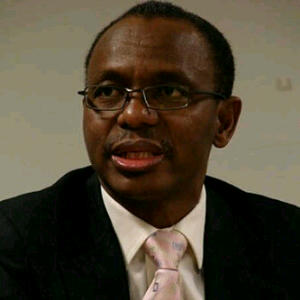
Mallam Nasir Elrufai
Discover more from IkonAllah's chronicles
Subscribe to get the latest posts sent to your email.
