

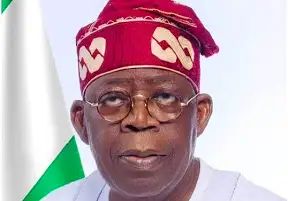
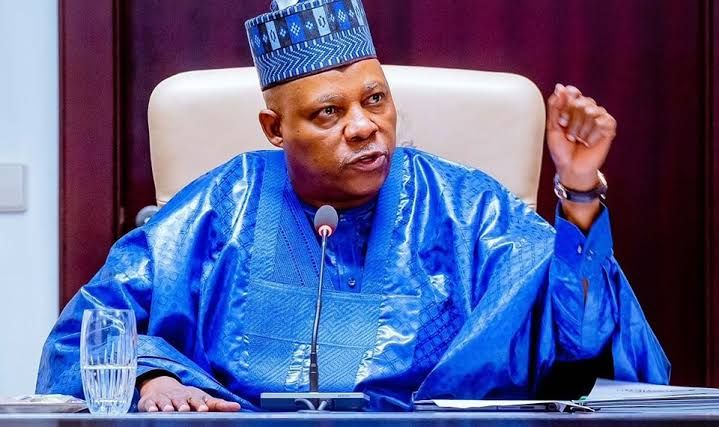
The Nigerian presidency is once again caught in the simmering heat of intra-power dynamics, and this time the centre of the storm appears to be the uneasy silence between President Bola Ahmed Tinubu and his Vice President, Senator Kashim Shettima. While official quarters maintain a façade of unity, political observers and insiders are increasingly convinced that all is not well between the two highest occupants of the land. Whispers have grown into conversations, and conversations are fast morphing into narratives of a looming feud that could threaten not just the All Progressives Congress (APC) but the nation’s political stability ahead of the 2027 elections.
The Elephant in the Villa
The Vice President has of late become notably absent from key national assignments, leading many to speculate that the bond that once symbolized North-South unity in the Tinubu-Shettima ticket is fracturing. Tinubu’s recent political moves — including the premature adoption of a candidate for the 2027 race by some APC chieftains (a move Shettima was not part of) — have only deepened suspicions of a deliberate political sidelining. The perception among northern loyalists is clear: they are being gradually pushed to the periphery of power. A political base that was crucial to Tinubu’s 2023 victory is now murmuring, and murmurs, if unattended, often become revolts.
Muslim-Muslim Ticket: What It Gave, What It May Take
The Muslim-Muslim ticket of Tinubu and Shettima was a bold and controversial strategy in 2023. It succeeded in uniting certain voting blocs, particularly in the North and South-West, by appealing to strong political structures and religious neutrality in governance. It was sold as a pragmatic, competence-over-identity approach — and it worked, electorally.
However, repeating that formula in 2027 may not yield the same results. The Christian community — especially in the Middle Belt and South-East — felt politically excluded in 2023. Many accepted the outcome out of democratic realism, not ideological support. If the APC insists on the same religious configuration in 2027, the pushback could be stronger, especially if it appears to come with internal disunity.
Now, there are whispers about dropping Shettima as VP in a potential restructuring of the ticket. While this might be seen as a way to rebalance religious representation or calm internal tensions, such a move could backfire significantly.
Dropping Shettima: A Risky Gamble?
Pros:
- Religious Rebalancing: Introducing a Christian VP candidate could help address religious concerns and potentially attract votes from aggrieved regions.
- Political Reset: It may be seen as a way to reset fractured alliances and bring in fresh energy to the campaign.
Cons:
- Northern Retaliation: Dropping Shettima could be interpreted as a betrayal of the North, particularly the North-East. It would likely fracture the APC coalition and push key blocs toward opposition alliances.
- Perception of Disloyalty: The image of Tinubu discarding his loyal deputy would contradict the campaign narrative of unity and joint sacrifice.
- Ethno-Religious Fallout: Such a move might amplify both ethnic and religious tensions, rather than easing them.
Ultimately, replacing Shettima may win symbolic approval in some quarters but lose practical support where it matters — on the electoral map.
The Danger of a Fractured Presidency
Governance thrives on trust, coordination, and a clear national vision. When the President and his Vice are not reading from the same script, governance becomes reactionary rather than visionary. Policies are politicized. National unity is threatened. The government begins to limp with one leg heavier than the other, and opportunistic politicians take advantage of the discord.
Even more dangerous is the precedent such disunity sets for the future. As 2027 draws nearer, a public perception of a divided presidency can embolden the opposition and fracture the ruling party. Should Shettima and other northern political elites feel isolated, they may coalesce around a new power bloc. It is no secret that if certain interests in the North feel alienated, and they align with Shettima or any credible alternative, they could pose a serious electoral threat to Tinubu’s re-election bid.
From APC’s Premature Politics to Institutional Decay
The irony in all this is that it was the APC itself — led by some overzealous loyalists — that prematurely turned up the heat on the 2027 campaign. The recent adoption of Tinubu as the party’s sole candidate for 2027, years ahead of INEC’s campaign timeline, has raised eyebrows. It disregards electoral guidelines and reeks of desperation. Worse still, Shettima’s absence from these endorsements — both symbolically and politically — speaks volumes.
What message is the party sending? That internal democracy is dead? That the Vice President is a disposable part of the machine? If so, it betrays the very unity and balance that the Tinubu-Shettima ticket was designed to represent.
Possible Paths to Reconciliation
Mending this broken relationship is not just politically wise — it is a national imperative. First, the President must acknowledge that power-sharing is not a weakness but a necessity in a pluralistic state like Nigeria. Re-integrating Shettima visibly and strategically into major decision-making processes will send a strong message of cohesion.
Secondly, the APC must abandon its obsession with premature succession politics. Respect for INEC’s electoral timeline is not only lawful — it helps stabilize the political climate. The party should discourage any form of early endorsement or campaign until the appropriate time.
Lastly, both Tinubu and Shettima must remember the larger goal: national unity, economic reform, and security. Personal ambitions must take a backseat to national interest. The duo owe it to Nigerians to keep their partnership functional, regardless of silent disagreements.
The Northern Card and 2027 Calculations
The North still holds considerable electoral weight. If Shettima, with his wide network among northern elites and governors, chooses to lead a counter-force — or even lend silent approval to one — the APC may find itself battling not only external opposition but internal revolt. The loyalty of the North cannot be taken for granted, and political marginalization, whether real or perceived, is a dangerous game.
A united ticket won in 2023. A divided house may not withstand the storm of 2027.
In conclusion, there is still time to course-correct. The President must reach out. The Vice President must speak up. And the APC must respect the law and political decorum. The Muslim-Muslim ticket was a calculated risk once. In 2027, it may become a liability if not handled with wisdom, balance, and sensitivity.
Ultimately, Nigeria deserves more than political chess moves. It deserves leadership that listens, unites, and delivers.
Abdul IkonAllah
Public Affairs Analyst and Political Commentator
@IkonAbdul | ikonallahwrites@gmail.com
Would you like this version prepared for a press release, media syndication, or graphic design for social media?
Discover more from IkonAllah's chronicles
Subscribe to get the latest posts sent to your email.
