
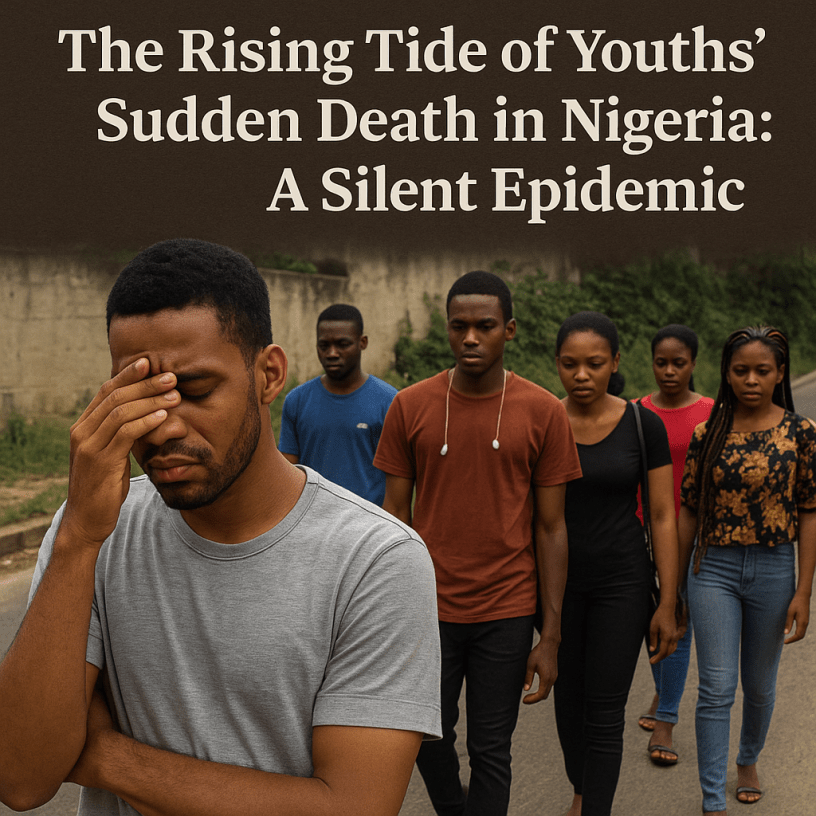

Increasingly, many young Nigerians are finding an escape in the nightlife and entertainment scene—late-night clubbing, binge drinking, smoking, drug use, and irregular sleep cycles. While socializing in moderation is healthy, a growing number of youths indulge in excessive partying as a form of relief from life’s stress. This pattern not only weakens the immune system and disrupts the body’s natural rhythms but also contributes to sudden collapses, mental health issues, and heart-related deaths.
In recent years, Nigeria has witnessed an alarming increase in the number of sudden deaths among its youth. From unexplained heart attacks and strokes to mental breakdowns and fatigue-induced collapses, the nation is mourning its most energetic, productive, and vibrant demographic—its young people.
Understanding the Causes
While sudden death may often be linked to medical conditions such as cardiac arrest, seizures, or undiagnosed chronic illnesses, the underlying causes among Nigerian youths are frequently connected to broader socio-economic and cultural pressures. These include:
1. Economic Stress and the Hustle Culture
Nigeria’s economic landscape is increasingly hostile to its youth. With high unemployment rates, inflation, and a lack of social safety nets, young people are often forced to juggle multiple jobs, engage in high-risk ventures, or work in toxic environments with little rest. The intense pressure to “make it” has birthed a relentless hustle culture where success is measured by material wealth, regardless of the cost to health.
2. The Pressure to Compete and Belong
Social media has become both a motivator and a destroyer. Platforms are flooded with images of luxury, success, and lavish lifestyles, prompting many youths to chase after unrealistic standards. The fear of being left behind or seen as unsuccessful drives some into unhealthy habits—abusing drugs, engaging in internet fraud, or overworking themselves—to appear as though they belong or have “arrived.” This constant comparison fuels anxiety, depression, and burnout, often with fatal consequences.
3. Unhealthy Lifestyles: Clubbing, Drinking, and Party Culture
Increasingly, many young Nigerians are finding an escape in the nightlife and entertainment scene—late-night clubbing, binge drinking, smoking, drug use, and irregular sleep cycles. While socializing in moderation is healthy, a growing number of youths indulge in excessive partying as a form of relief from life’s stress. This pattern not only weakens the immune system and disrupts the body’s natural rhythms but also contributes to sudden collapses, mental health issues, and heart-related deaths.
4. Neglect of Physical and Mental Health
Young Nigerians, in their bid to keep up with life’s demands, often ignore their health. Poor diets, irregular sleeping patterns, lack of medical checkups, and sedentary lifestyles weaken their bodies. Meanwhile, mental health is still largely stigmatized, with many suffering in silence from conditions like depression, anxiety, and trauma.
The Way Forward: Practical Solutions
Reversing this worrying trend will require a holistic approach—one that recognizes both the societal and personal responsibilities involved. Below are some vital solutions:
1. Rest and Recovery Must Be Prioritized
Sleep is not laziness. The human body requires rest to function optimally. Youths must learn to schedule proper breaks, value downtime, and stop glorifying nonstop work. Employers, too, need to create work cultures that respect mental and physical well-being.
2. Exercise as a Lifestyle, Not a Luxury
Physical activity doesn’t require a gym membership. Simple routines like daily walks, stretching, or home workouts can make a big difference. Regular exercise improves cardiovascular health, boosts mood, and reduces the risk of sudden health complications.
3. Embrace Contentment
There is peace in contentment. Learning to appreciate one’s journey without constant comparisons to others is essential for mental balance. Success should be defined personally, not by viral trends or public opinion. When young people understand that value isn’t only tied to wealth or visibility, the pressure to overextend themselves may ease.
4. Practice Moderation in Lifestyle
From alcohol to late-night parties, stimulants, and digital binging, moderation is key. Living for the weekend or drowning stress in overindulgence does long-term harm. A balanced lifestyle that includes adequate sleep, clean eating, and limited exposure to harmful habits can greatly reduce health risks.
Conclusion
The premature death of Nigerian youths is more than a medical concern; it’s a reflection of a society that places success above wellness, image above substance, and speed above sustainability. If this trend is to be halted, there must be a conscious shift—both culturally and personally—towards healthier, balanced, and more meaningful living.
The future of any nation lies in its youth. Let Nigeria protect hers—not just from external dangers, but from the silent killers of stress, pressure, indulgence, and neglect.
Discover more from IkonAllah's chronicles
Subscribe to get the latest posts sent to your email.
