
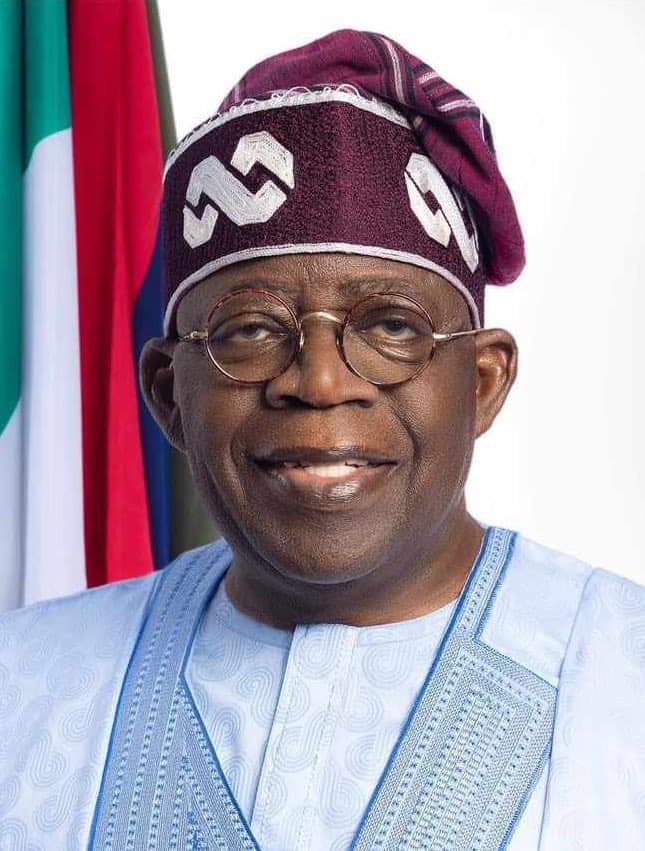

As Nigeria moves closer to another election cycle, the nation’s political landscape is once again shifting beneath the feet of key actors. The internal crises within the major opposition party, the Peoples Democratic Party (PDP), and President Bola Tinubu’s tightening hold on the All Progressives Congress (APC) have created a complex environment for opposition figures seeking relevance—none more so than former Labour Party presidential candidate, Peter Obi.
With the Labour Party (LP) battling leadership legitimacy struggles and the PDP fractured by internal distrust and unresolved power rotation disputes, many question where Obi fits in the emerging political equation. Can he still mount a credible presidential challenge? And, perhaps more importantly, under which platform?
Labour Party: A Platform in Disarray
The Labour Party provided the structure that propelled the “Obidient” movement into national prominence in 2023. However, ongoing legal battles, accusations of external interference, and factional leadership tussles have eroded its stability. For a presidential hopeful seeking national appeal and institutional depth, LP’s crisis presents a major obstacle.
Unless the party resolves its internal contradictions quickly and convincingly, it may not offer the strong platform Obi needs to compete against a more unified APC.
PDP and APC: Two Different Storms
The PDP continues to grapple with unresolved grievances from its 2022/2023 primaries, regional distrust, and a lack of a coherent opposition strategy. The party’s inability to present a united front has diminished its capacity to serve as a strong alternative to the ruling APC.
Meanwhile, President Tinubu has tightened his control over APC structures nationwide. With the advantage of incumbency and a firm grip on the party, APC appears more cohesive today than at any point in the last five years. A fragmented opposition only strengthens the ruling party’s pathway to another term.
ADC as a Third-Force Platform: A Realistic Option?
Among Nigeria’s smaller parties, the African Democratic Congress (ADC) stands out as one of the few with national presence, internal stability, and relative neutrality. It has no major factional war, no dominant strongman, and no recent scandals—making it an attractive platform for any coalition of opposition forces.
The question is whether Peter Obi, possibly in alliance with Atiku Abubakar, should consider ADC as the new vehicle for a united opposition.
A joint ticket with Atiku as presidential candidate and Obi as vice president has already sparked discussions among political observers. The logic is straightforward: a united North–South alliance backed by the political weight of both men could produce a competitive challenge in 2027. ADC provides a neutral ground where neither man appears subordinate.
Will the South-East Accept a Vice-Presidential Slot?
This is one of the most sensitive questions.
Peter Obi’s strongest support base—the South-East and a portion of the Southern youth movement—has long held the belief that the region deserves its first shot at the presidency since 1966. A VP slot may be seen as a setback by some.
But viewed strategically, accepting the vice-presidential role could be the quickest route for the South-East to the presidency.
If APC retains power through Tinubu’s second term (2023–2031), zoning calculations may favour the North afterward, delaying a South-East opportunity until as late as 2038. A vice-presidential slot in 2027—especially if the opposition wins—positions Peter Obi or another South-Easterner to become a strong presidential contender by 2031 or 2034.
Political realism sometimes demands patience.
Can Peter Obi Win the Presidency in 2027?
For Obi to win in 2027, four conditions would need to align:
- A united opposition platform
– Without unity, neither PDP nor LP nor any smaller party can dethrone a consolidated APC. - A broad North–South alliance
– Obi will need northern political heavyweights and grassroots structures to complement his urban youth support. - A stable party with national spread
– LP’s current crisis does not provide that.
– ADC or a reformed PDP are more viable options. - A clear message and coalition-driven campaign
– A solo approach, as seen in 2023, may energize the youth but not deliver the widespread political alliances needed to win.
Given current realities, Obi’s chances of winning the presidency alone on a weakened LP platform are slim. But his chances dramatically improve in a broader coalition—whether as presidential or vice-presidential candidate.
Conclusion
Nigeria’s political future is far from settled, and the opposition landscape is still in motion. Peter Obi remains one of the most influential political figures in the country today, but influence alone does not deliver electoral victory. Platform, structure, coalition-building, and strategic compromise will determine his path forward.
If he chooses to run again, his decision of platform—and whether he aligns with Atiku or any other northern heavyweight—will shape not only his political future but also the broader trajectory of the opposition.
For the South-East, the debate remains: insist on the presidency in 2027 and risk long-term marginalization, or accept a vice-presidential slot as a calculated step toward securing a realistic pathway to national leadership.
Nigeria stands at another crossroads, and the decisions made now by key political actors will echo far beyond the next election cycle.
Discover more from IkonAllah's chronicles
Subscribe to get the latest posts sent to your email.
