
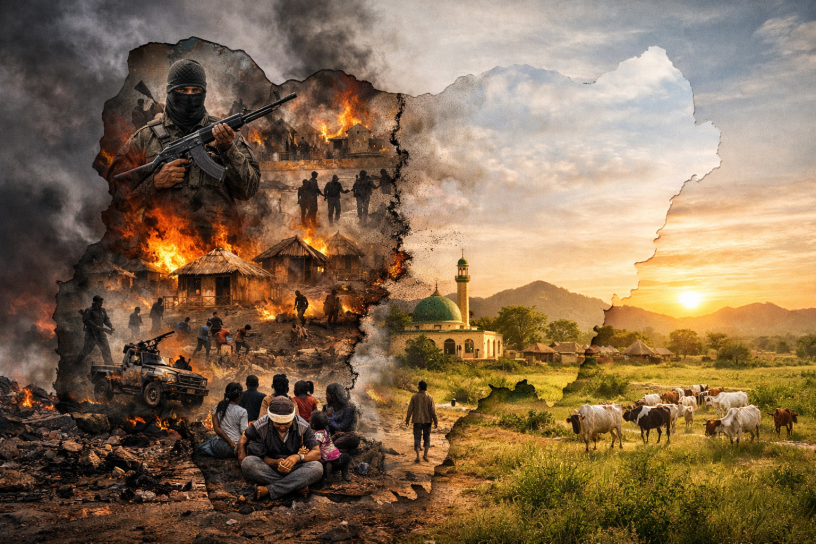
For decades, Northern Nigeria was widely associated with communal harmony, deep religious values, strong family structures and a culture that prized restraint over excess. Today, however, much of the negative news emanating from Nigeria bears a northern imprint: terrorism in the North-East, banditry and mass abductions in the North-West, gruesome communal killings in parts of the North-Central, and a steady spread of criminality into once-quiet communities.
This grim pattern has fed a dangerous narrative—that the North is lost. That conclusion is neither accurate nor helpful. But the scale, frequency and ferocity of violent crimes in the region demand honest interrogation.
A Catalogue of Trauma
The North-East remains scarred by over a decade of insurgency, with Boko Haram and ISWAP displacing millions, destroying livelihoods and normalising violence for an entire generation. In the North-West, banditry has evolved from cattle rustling into organised criminal enterprises involving mass kidnappings, village raids and territorial control. The Middle Belt has suffered recurring cycles of reprisal killings, often triggered by land disputes, criminal opportunism and identity manipulation.
While the South also grapples with cultism, separatist violence, cybercrime and urban criminality, the brutality witnessed in many northern attacks—entire villages wiped out, women and children murdered, communities razed—has been particularly shocking. Violence is no longer episodic; it has become systemic.
How Did a Peaceful Region Get Here?
Several interconnected factors explain this descent.
First is state fragility at the local level. Vast ungoverned spaces, weak policing, and poor intelligence penetration have allowed armed groups to thrive. In many rural areas, the state is absent except in name.
Second is economic collapse and social dislocation. Chronic poverty, youth unemployment, climate stress, and the breakdown of traditional livelihoods—especially farming and pastoralism—have created a large pool of angry, idle and easily recruitable young men.
Third is the erosion of moral and traditional authority. Institutions that once mediated conflict—traditional rulers, religious leaders, community elders—have been weakened by politicisation, fear, or loss of legitimacy.
Fourth is the weaponisation of identity. Criminal violence is often framed in ethnic or religious terms, inflaming passions and triggering reprisals, even when the underlying drivers are purely criminal or economic.
Finally, there is normalisation of violence. After years of bloodshed, communities risk becoming desensitised, seeing killings as tragic but inevitable, rather than preventable.
Breaking the Cycle
The North is not doomed. But recovery requires deliberate, sustained action.
Security responses must go beyond firepower to include community-based intelligence, effective policing of rural areas, and accountability for abuses. Economic revival is critical: targeted investments in agriculture, livestock reform, irrigation, and skills development can undercut the incentives for crime.
Equally important is rebuilding trust—between communities and the state, and among communities themselves. Dialogue, justice for victims, and firm punishment for perpetrators—regardless of identity—must replace denial and excuses.
Traditional and religious institutions must be re-empowered as peace actors, not sidelined or politicised. Education—both formal and civic—should be prioritised to counter extremism and restore shared values.
Above all, leadership at all levels must speak with moral clarity. Violence must never be rationalised, explained away, or ethnicised.
A Region Worth Saving
Northern Nigeria is home to immense human capital, cultural depth and economic potential. Its current crisis is not a reflection of its values, but of long-standing neglect and compounded failures. To write off the North is to write off Nigeria itself.
The cycle of violence can be broken—but only if we confront uncomfortable truths and commit, collectively, to peace as a policy, not a slogan.
Discover more from IkonAllah's chronicles
Subscribe to get the latest posts sent to your email.
