
Abdul Kezo IkonAllah
In the glittering districts of Abuja, a silent contradiction is unfolding. Behind tall gates and manicured estates sit hundreds — perhaps thousands — of completed houses that remain empty. Yet across the same city, civil servants, teachers, security personnel, and junior government workers struggle desperately to find affordable accommodation.
This paradox exposes one of the most troubling distortions in Nigeria’s housing sector: a capital city where luxury property thrives while ordinary workers cannot afford to live decently.
The problem goes beyond simple market forces. It reflects a system where housing has increasingly become a store of wealth for the elite rather than a basic necessity for citizens.
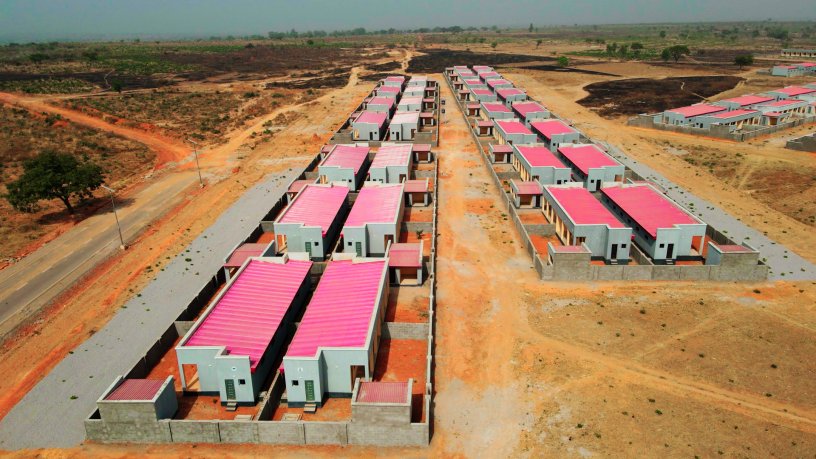
Across Abuja, estates in areas such as Guzape, Katampe, Jahi and Lokogoma have rows of completed buildings with little or no occupancy. Many were purchased as speculative investments. Some belong to politically exposed persons. Others are held by investors who simply expect property prices in the capital to rise over time.
While these houses remain unused, many workers in Abuja are forced to live far outside the city centre or share cramped apartments because rents have spiraled beyond reach.
For a modest two-bedroom flat in parts of Abuja today, annual rents can range between ₦1.5 million and ₦4 million — far beyond the salary structure of most public servants.
Ironically, many of these same civil servants are already contributing money toward housing.
Through deductions linked to the Federal Mortgage Bank of Nigeria under the National Housing Fund scheme, workers contribute a portion of their monthly income with the promise that the funds will eventually support access to affordable mortgages.
Yet for many contributors, the reality has been frustrating. Years of deductions have not translated into access to homes. Thousands of workers remain contributors on paper but beneficiaries nowhere in sight.
The result is growing frustration among civil servants who feel they are paying into a system that has failed to deliver.
At the same time, the supply of housing in Abuja remains heavily skewed toward high-end development. Private developers focus on luxury duplexes and gated estates designed for the wealthy because those projects promise higher returns.
But the vast majority of residents in the capital do not need luxury villas. They need modest, functional, and affordable homes.
This mismatch between supply and demand has produced a city where empty mansions coexist with overcrowded rental apartments.
The social consequences are profound.
Workers who cannot afford housing close to their workplaces spend hours commuting from distant suburbs. Families are forced into cramped living conditions. Young professionals delay settling down because housing costs are prohibitive.
Over time, such pressures deepen inequality in the capital and erode confidence in public institutions.
If Abuja is to remain a functional and inclusive capital city, urgent reforms are required.
First, transparency and accountability must be strengthened in the management of the National Housing Fund administered by the Federal Mortgage Bank of Nigeria. Contributors deserve clear records of how their funds are used and when they can realistically access housing.
Second, government must deliberately promote affordable housing development rather than leaving the sector entirely to market speculation. Incentives such as tax breaks, subsidised land, and infrastructure support can encourage developers to build homes targeted at middle- and low-income earners.
Third, authorities should consider policies that discourage the accumulation of empty properties purely for speculation. Cities around the world have introduced vacancy taxes on unused homes to encourage owners to either rent them out or sell them.
Fourth, stronger oversight is needed to prevent the real estate sector from becoming a haven for illicit financial flows. Anti-corruption agencies such as the Economic and Financial Crimes Commission must continue to scrutinise suspicious property acquisitions that may be linked to unexplained wealth.
Finally, Abuja’s urban planning authorities must rethink the current development model. Housing policies should prioritise inclusive communities where teachers, nurses, security personnel, and civil servants can live within reasonable distance of their workplaces.
A capital city should not become a museum of empty luxury estates.
It should be a living city — one where the people who run its institutions can also afford to live in dignity.
Until that balance is restored, Abuja’s silent estates will remain a powerful symbol of a housing system that serves capital far better than it serves citizens.
Discover more from IkonAllah's chronicles
Subscribe to get the latest posts sent to your email.
