
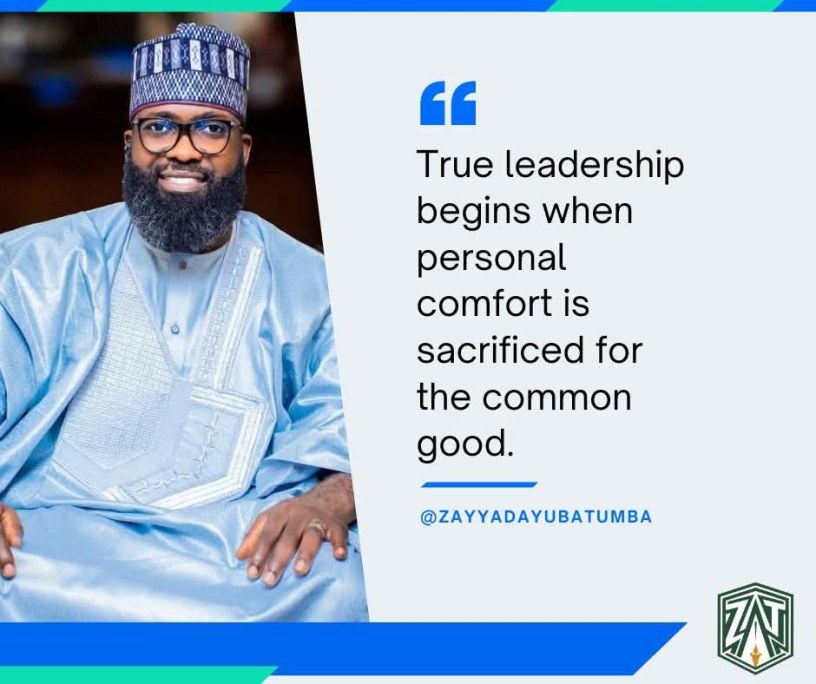
In every society, leadership is ultimately measured not by titles, access, or visibility, but by the depth of its impact on the lives of the people. The recent public message by Zayyad Ayuba, widely identified with the title Sardaunan Karewa, following his visit to former Vice President in Abuja, offers a compelling window into a philosophy of leadership that deserves closer examination.
At the heart of the message lies a simple but profound idea: leadership is about impact, vision, and lifting others. This statement goes beyond the language of politics and touches on a broader social philosophy rooted in service, empowerment, and nation-building. It presents leadership not as an ornament of office, but as an obligation to create pathways for others to rise.
This is particularly evident in the emphasis placed on youth development. The commendation reportedly given to Sardaunan Karewa for his dedication to young people, especially in promoting business and self-reliance, reflects a practical understanding of social transformation. In a country where the youth population constitutes both its greatest demographic strength and one of its most pressing policy challenges, any leadership philosophy that prioritizes economic empowerment speaks directly to the future of national stability.
The idea that investing in young people is equivalent to investing in tomorrow is not merely rhetorical. It is a strategic recognition that sustainable development begins with human capital. Empowered youth are more likely to become innovators, entrepreneurs, civic actors, and agents of peace. In this sense, the philosophy projected by Zayyad Ayuba aligns with a developmental vision in which leadership must produce measurable outcomes—opportunities, livelihoods, and hope.
Equally significant is the political symbolism of the visit itself. Meaningful discussions on the future of the nation suggest a leadership style that values engagement with the highest levels of national discourse. This reflects an understanding that societal progress is shaped not only at the grassroots level but also through strategic dialogue and policy influence. Leadership, in this context, becomes both local in impact and national in ambition.
The social implications of this philosophy are considerable. A society that embraces leadership defined by vision and empowerment is one more likely to foster mentorship, civic participation, and collective responsibility. It encourages younger generations to see leadership as service rather than entitlement, and influence as something to be earned through contribution.
However, inspiration alone is not enough. The true test of any philosophy lies in implementation. The public must ultimately judge leadership by outcomes: the number of youths empowered, the businesses supported, the communities strengthened, and the opportunities created. Vision must translate into structure; words must become policy and action.
At a time when public trust in leadership is frequently tested, the philosophy articulated by Sardaunan Karewa offers an important reminder: leadership attains meaning only when it lifts others.
Public Relations Professional, Public Affairs Analyst, and New Media Specialist
Discover more from IkonAllah's chronicles
Subscribe to get the latest posts sent to your email.
