
OPINION | November 11, 2026

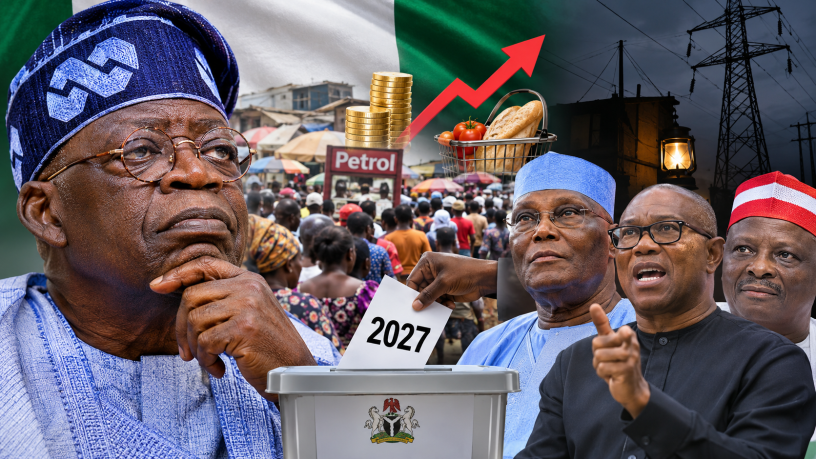
As Nigeria approaches the 2027 presidential election, the ruling All Progressives Congress faces a difficult political reality: the growing gap between the confidence of those in power and the economic frustrations of millions of ordinary Nigerians.
The political temperature in Nigeria is rising. Across the country, politicians are realigning, governors are declaring their loyalties, opposition leaders are exploring alliances, and the ruling All Progressives Congress (APC) is projecting confidence in its ability to retain power in 2027.
Yet beneath the rallies, endorsements and political calculations lies a troubling reality that the country’s political establishment may be underestimating: the growing dissatisfaction of ordinary Nigerians with their living conditions.
For millions of citizens, the central question is no longer which political party controls the greatest number of states or commands the largest crowds at campaign rallies. It is whether their lives have improved under the present administration.
And for households struggling with the rising cost of food, transportation, healthcare, education and electricity, that question demands serious answers.
The 2027 presidential election may therefore become much more than another contest between familiar political personalities. It could become a referendum on economic hardship, unfulfilled expectations and the credibility of Nigeria’s democratic institutions.
The Dangerous Illusion of Political Dominance
One of the greatest mistakes a ruling party can make is to confuse the loyalty of political elites with the support of the electorate.
The APC enjoys substantial advantages of incumbency. It has influential governors, established party structures, experienced political operators and considerable organisational reach.
These advantages matter in Nigerian politics. Governors can mobilise supporters, coordinate political activities and influence electoral contests within their states.
But political machinery is not the same as popular approval.
A governor’s endorsement does not automatically transfer the votes of an entire state to his preferred presidential candidate. Neither does a massive political rally necessarily reflect the genuine preferences of the wider electorate.
The danger for the APC is that its leadership may mistake the enthusiasm of political beneficiaries for the satisfaction of ordinary Nigerians.
The market woman whose daily earnings can barely replenish her stock, the civil servant whose salary no longer adequately feeds his family, the unemployed graduate searching for opportunities and the small-business owner struggling with electricity costs are unlikely to measure government performance by the number of governors standing behind the president.
They will measure it by the conditions under which they live.
That is the disconnect the ruling party must confront.
Fuel Subsidy Removal and the Burden of Economic Reform
President Bola Ahmed Tinubu’s announcement of petrol subsidy removal in May 2023 marked a defining moment in his administration.
The government justified the decision as necessary to address an unsustainable fiscal burden, eliminate economic distortions and redirect public resources towards development.
There were legitimate economic arguments for reforming Nigeria’s subsidy system. For years, the country struggled with the enormous financial implications of subsidising petrol amid serious infrastructure deficits and competing development priorities.
However, the manner in which the policy was implemented, particularly the adequacy and effectiveness of measures intended to cushion its consequences, remains a major subject of public criticism.
The resulting increases in transportation and energy costs contributed to broader inflationary pressures. Combined with exchange-rate depreciation and other economic difficulties, these developments significantly affected household purchasing power.
For many Nigerians, disposable income has become increasingly inadequate to meet basic family needs.
Although economic hardship is a global phenomenon, Nigeria’s circumstances have been aggravated by longstanding structural weaknesses, limited social protection and domestic policy decisions.
The government has repeatedly argued that its reforms are necessary to secure long-term economic stability.
But economic reforms cannot be judged solely by improvements in government revenue or macroeconomic indicators.
They must also be measured by their consequences for ordinary people.
A government cannot indefinitely demand sacrifice without demonstrating that those sacrifices are producing meaningful improvements in citizens’ lives.
For many voters, the critical question in 2027 will be whether the promised benefits of economic reform have become sufficiently visible to justify another mandate.
Tinubu’s Electricity Promise: A Test of Accountability
Perhaps one of the most politically consequential campaign commitments President Tinubu made before assuming office concerned electricity supply.
During his 2022 presidential campaign, Tinubu publicly challenged Nigerians not to vote for him for a second term if he failed to deliver adequate electricity, while also allowing for the possibility of explaining why the commitment could not be fulfilled.
That promise was significant because it placed electricity supply at the centre of political accountability.
Nigeria’s electricity crisis did not begin with the Tinubu administration. Successive governments have struggled with inadequate generation, transmission constraints, distribution inefficiencies and chronic underinvestment.
Nevertheless, a presidential candidate who makes electricity supply a prominent campaign commitment invites the electorate to assess his performance against that promise.
The administration can point to legislative reforms, infrastructure investments and other initiatives intended to improve the electricity sector.
But the existence of government initiatives is not necessarily proof that the promised improvement has been delivered.
For households and businesses, the decisive question is whether electricity has become more reliable, accessible and affordable.
Across Nigeria, unreliable power supply remains a serious challenge for economic activity and everyday life.
Small businesses continue to contend with the costs of alternative power generation, while households struggle with the consequences of inconsistent supply.
As the president seeks another mandate, Nigerians are entitled to revisit his earlier commitment.
His qualification that he might provide reasons for any failure deserves to be acknowledged. But those reasons must themselves withstand public scrutiny.
Political accountability requires more than promises and explanations. It requires measurable results.
Atiku, Obi, Kwankwaso and the Opposition’s Opportunity
The growing dissatisfaction with the ruling party presents a potentially significant opportunity for the opposition.
Former Vice President Atiku Abubakar remains one of Nigeria’s most experienced opposition politicians. His extensive political networks, longstanding relationships and familiarity with presidential campaigns make him a potentially formidable challenger.
Atiku’s political appeal may be strengthened by voters who associate earlier periods of Peoples Democratic Party governance with greater affordability and more predictable household expenditure.
However, nostalgia alone is not an economic programme.
Any proposal to restore petrol subsidy, whether fully or in a modified form, must be accompanied by a credible explanation of its financial implications and sustainability.
Nigerians deserve more than promises to return to a supposedly better past.
Peter Obi, meanwhile, represents a different political challenge to the establishment.
His performance in the 2023 presidential election demonstrated the capacity of a movement substantially driven by younger voters, urban professionals, volunteers and citizens dissatisfied with traditional political structures.
Obi’s appeal rests partly on his message of accountability, prudent management of public resources and a different approach to governance.
Rabiu Musa Kwankwaso also remains an important political figure, particularly because of his established support in Kano and parts of northern Nigeria.
The possibility of cooperation among these opposition forces raises important questions about the electoral prospects of the APC.
An effective alliance could potentially strengthen the opposition’s geographical reach and organisational capacity.
But electoral arithmetic is rarely as simple as adding together the votes previously won by different candidates.
Political alliances must overcome personal ambitions, regional interests, organisational differences and competing leadership expectations.
More importantly, they must convince Nigerians that their cooperation represents a credible alternative government rather than merely an arrangement to defeat the incumbent.
The opposition’s greatest opportunity may lie in public dissatisfaction.
Its greatest weakness may be its inability to translate that dissatisfaction into a coordinated national electoral strategy.
Could the APC Suffer an Unexpected Defeat?
It would be premature to declare that the ruling party is destined to lose the 2027 presidential election.
Incumbency, political organisation, regional alliances, campaign resources and opposition fragmentation remain significant factors.
Nevertheless, it would be equally mistaken to assume that these advantages guarantee victory.
There is a plausible scenario in which economic dissatisfaction produces a substantial protest vote against the ruling party.
There is also a scenario in which opposition divisions allow the APC to retain power despite widespread public frustration.
A more dramatic outcome, including the ruling party finishing behind two opposition candidates, cannot be ruled out as a theoretical possibility. But such a prediction would require credible nationwide polling, evidence of regional voting shifts and careful electoral analysis.
Street conversations, political rallies and social media sentiment cannot establish that outcome on their own.
What can reasonably be said is that the APC faces a serious test of public confidence.
The critical question is whether dissatisfied voters will participate in sufficient numbers, and whether their votes will translate into a decisive electoral outcome.
Political history demonstrates that governing parties can misread the public mood, particularly when those around the leadership have strong incentives to report favourable political conditions.
The APC would therefore be taking a considerable risk if it interpreted elite endorsements as conclusive evidence of electoral strength.
INEC, the Judiciary and the Crisis of Public Confidence
Perhaps the most troubling dimension of the approaching election is the growing distrust expressed by sections of the electorate towards institutions responsible for protecting the democratic process.
Nigeria’s 2023 presidential election generated substantial controversy over the electronic transmission and publication of polling-unit results, the performance of electoral technology and the transparency of the collation process.
Although the courts ultimately upheld the declared presidential result, the controversies left serious questions about public confidence in electoral administration.
Those concerns have not disappeared.
Recent disclosures concerning irregularities in the voter register have further intensified public debate about the integrity of Nigeria’s electoral system.
INEC’s reported removal of approximately 1.6 million invalid registrations raises important questions about the processes through which such entries entered the register, the effectiveness of existing safeguards and the measures being taken to prevent future irregularities.
The removal of invalid registrations can itself demonstrate that corrective mechanisms are functioning. However, transparency requires more than announcing that irregularities have been discovered.
Nigerians deserve to know how those irregularities occurred, who was responsible where misconduct is established, and what safeguards will prevent their recurrence.
Similarly, the increasing involvement of the courts in political party disputes has generated concerns about the extent to which judicial decisions may influence the electoral choices available to citizens.
The judiciary has a constitutional responsibility to interpret and enforce the law, including in electoral disputes. But the exercise of that responsibility must be accompanied by visible independence, consistency and impartiality.
There are widespread allegations and suspicions in political discussions that the ruling party enjoys undue influence over electoral and judicial institutions.
Such allegations are serious and should not be accepted as established facts without credible evidence.
Nevertheless, the existence of these suspicions points to a deeper institutional problem: a crisis of public confidence.
Democratic institutions cannot rebuild trust simply by insisting that they are impartial.
They must demonstrate impartiality through their conduct.
INEC must ensure that electoral procedures are transparent, polling-unit results are verifiable, technological systems are properly tested, and irregularities are investigated without political discrimination.
The judiciary must continue to demonstrate that electoral disputes are determined by law and evidence rather than the political status of the parties involved.
Above all, Nigerians must be confident that their votes will count.
The danger of a disputed election extends beyond the fortunes of any political party. It threatens the legitimacy of democratic government itself.
The Anger of the Electorate Must Not Be Underestimated
There is an important political lesson that Nigeria’s ruling class must understand.
Citizens can endure considerable hardship when they believe their sacrifices are producing meaningful progress.
But when hardship persists without visible improvement, patience can gradually give way to resentment.
That resentment may not always manifest through street protests or organised demonstrations.
Sometimes it is expressed quietly in markets, motor parks, offices, homes and community gatherings.
Sometimes it is reflected in the decision of a voter who once supported a political party but no longer believes its promises.
And sometimes it becomes visible only when ballots are counted.
The political establishment must therefore resist the temptation to dismiss public frustration simply because the government continues to enjoy the loyalty of powerful politicians.
The ordinary Nigerian may not have access to the corridors of power, but the ballot provides an opportunity to express a political judgment.
At the same time, public anger should not be confused with automatic support for the opposition.
Dissatisfaction with an incumbent government does not necessarily translate into confidence in those seeking to replace it.
The opposition must earn that confidence through credible policies, responsible leadership and a convincing demonstration that it can govern differently.
Nigeria’s challenges are too serious to be resolved by merely changing the personalities occupying public office.
The country needs effective institutions, sustainable economic policies, reliable infrastructure, accountable leadership and measurable improvements in citizens’ welfare.
2027 Must Be a Referendum on Performance
The approaching presidential election should provide Nigerians with an opportunity to evaluate the record of the present administration and the credibility of those seeking to replace it.
For President Tinubu, the central challenge is whether the economic reforms undertaken since 2023 have produced improvements that ordinary citizens can recognise in their daily lives.
For Atiku Abubakar, Peter Obi, Rabiu Kwankwaso and other opposition figures, the challenge is to demonstrate that they possess credible alternatives capable of addressing Nigeria’s economic and institutional weaknesses.
For INEC and the judiciary, the responsibility is to protect the integrity of the democratic process and reassure citizens through transparent, lawful and impartial conduct.
For the electorate, the task is to distinguish between political spectacle and genuine accountability.
Nigeria’s democracy will be strengthened not merely by the victory of one candidate over another, but by an election in which citizens can vote freely, results can be independently scrutinised and the outcome reflects the lawful choice of the electorate.
No political party should regard control of government as a permanent entitlement.
Neither should any opposition party assume that public dissatisfaction automatically guarantees its victory.
Political power derives its democratic legitimacy from the consent of the governed.
And that consent must be renewed through credible elections.
Conclusion: The Verdict May Come From the Streets, Not the Political Establishment
As the political temperature rises ahead of 2027, Nigeria’s ruling elite would do well to remember that the country extends far beyond government houses, party secretariats and presidential campaign venues.
The millions of Nigerians struggling to make ends meet are not merely spectators in the political process.
They are citizens whose votes ultimately determine the legitimacy of democratic leadership.
The APC may possess the advantages of incumbency, extensive political networks and powerful allies.
But none of these advantages can permanently substitute for public trust.
The opposition may possess a growing opportunity to challenge the ruling party, but it must demonstrate the unity, discipline and credibility required to turn dissatisfaction into electoral success.
And the institutions responsible for administering the election must understand that public confidence is earned through demonstrable impartiality, not official assurances alone.
The outcome of the 2027 presidential election remains uncertain. The political advantages of the incumbent are real, just as the economic grievances of many citizens are real.
What is increasingly clear is that the next election will test whether Nigeria’s political establishment has properly understood the depth of public frustration.
If the contest is credible, competitive and transparent, Nigerians will have the opportunity to deliver their verdict on the promises made, the sacrifices demanded and the results achieved.
Ultimately, the most important political force in 2027 may not be the governors who endorse a candidate, the crowds assembled at rallies or the alliances negotiated behind closed doors. It may be the ordinary Nigerian who has endured years of hardship and finally decides that enough is enough.
Abdul is a public relations specialist and public affairs analyst
Editorial note: This is an opinion article, not a prediction of the election result. The article deliberately treats allegations of institutional manipulation as allegations rather than proven facts.
Discover more from IkonAllah's chronicles
Subscribe to get the latest posts sent to your email.
