
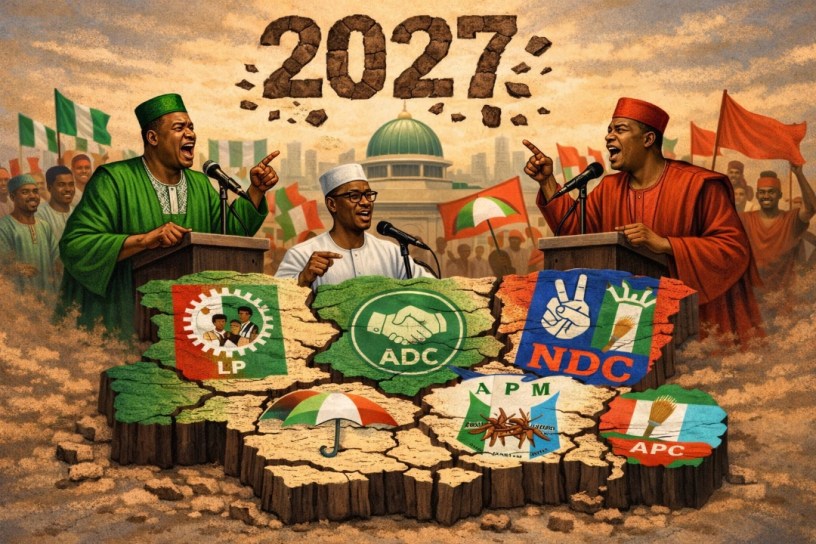
If the current trend of closer Trump–Nigeria security cooperation continues into Nigeria’s next general election cycle, the implications could be significant, though not necessarily in the way many expect.
Security Could Become Tinubu’s Strongest Campaign Asset
The most immediate political benefit for the ruling party would be any measurable improvement in security. The United States and Nigeria have expanded intelligence sharing, counterterrorism cooperation, military training, and operational coordination against terrorist groups. Recent joint actions and the deployment of U.S. military trainers have reinforced this partnership.
If terrorist attacks, kidnappings, and insurgent activities decline substantially before the election, the administration could argue that its foreign policy and security strategy are delivering results.
Northern Nigeria Remains the Deciding Factor
For many voters in northern Nigeria, security remains a more pressing concern than macroeconomic indicators. If communities in the North begin to experience noticeable improvements in safety, transportation, farming activities, and commerce, that could reshape political calculations in key states.
The political narrative could shift from:
“The government has failed to protect us”
to
“The government is finally restoring security.”
That would be a significant advantage for any incumbent.
Opposition Parties Face a Strategic Challenge
Opposition candidates may find it harder to campaign solely on insecurity if security indicators improve. They would likely shift their focus toward:
- Cost of living
- Inflation
- Unemployment
- Governance and corruption
- Concerns about foreign military involvement
The debate could therefore move from security to economic performance.
Potential Risks for the Government
The partnership is not without political risks.
Some Nigerians remain uncomfortable with foreign military involvement on Nigerian soil. Critics could portray deeper U.S. involvement as a compromise of sovereignty or evidence that Nigeria’s security institutions require outside intervention.
Others may question Trump’s broader policies toward Nigeria, including previous threats, travel restrictions, and criticism of the country’s security situation.
The Trump Factor
Trump’s foreign policy is highly transactional. Recent developments suggest that relations between Abuja and Washington have evolved from tension to pragmatic cooperation centered on security and counterterrorism.
For Nigerian politicians, maintaining constructive relations with Washington could be viewed as an advantage, particularly if it brings military assistance, intelligence support, and investment opportunities.
The Bigger Picture
The greatest electoral impact will not come from the military pact itself but from its outcomes.
If Nigerians experience:
- Reduced terrorism,
- Fewer kidnappings,
- Safer highways,
- Increased agricultural activity,
- Greater economic stability,
then the ruling party is likely to benefit politically.
If security cooperation fails to produce visible improvements in daily life, voters will focus instead on economic hardship, and the partnership will have limited electoral value.
In short, the military partnership with the Trump administration could become a major electoral asset for the government—but only if ordinary Nigerians, particularly in the North, see tangible improvements in security before they go to the polls.
Discover more from IkonAllah's chronicles
Subscribe to get the latest posts sent to your email.
