
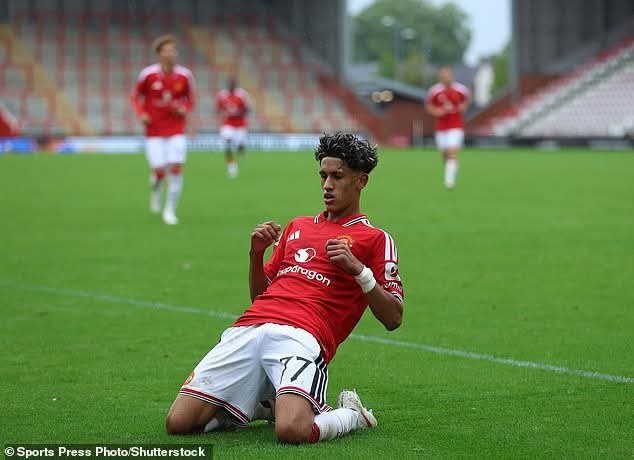
The reported desire of 15-year-old Manchester United academy sensation JJ Gabriel to leave the club has created a major debate about youth development, parental influence, and the pressure placed on football’s brightest young talents. Reports suggest Gabriel’s camp has requested an exit, with interest from some of Europe’s biggest clubs, although the exact reasons behind the dispute remain a matter of competing accounts.
At the centre of the controversy is not only the future of a gifted teenager, but also a question facing modern football: how do clubs, families and players manage extraordinary talent without damaging the relationship that helped create it?
A Father Protecting His Son or Applying Too Much Pressure?
Joe O’Cearuill, Gabriel’s father and a former professional footballer, has played a significant role in managing his son’s career. Supporters of his approach would argue that his ambition comes from wanting to protect his son’s development and ensure that a rare talent does not get overlooked.
Football history is full of young players whose careers accelerated because someone around them demanded more. Families often have to fight for opportunities because elite academies are highly competitive environments.
However, there is also a danger when expectations become too intense. A teenager labelled as a future superstar can quickly become surrounded by pressure, comparisons and commercial attention before he has fully developed physically and emotionally.
The key issue is not whether a parent is ambitious. The issue is whether ambition is being balanced with patience and professional guidance.
Where Manchester United May Have Miscalculated
United appear to believe they have provided Gabriel with a clear pathway, including first-team exposure, training opportunities and contact with senior figures at the club. Reports indicate the club had planned opportunities for him to be involved around the senior squad before the dispute emerged.
But from the family’s perspective, the argument may be that a player of Gabriel’s ability requires a more aggressive development plan.
This is where communication becomes critical.
Young talents today see players like Lamine Yamal and other teenagers breaking into elite football early. Even if every player develops differently, those examples influence expectations.
The question becomes:
Is Gabriel being protected from unnecessary pressure, or is he being delayed when he is ready for a bigger challenge?
Possible Solutions to Prevent His Exit
1. Create a Written Development Roadmap
United should sit down with Gabriel, his family and his representatives and present a detailed 18–24 month plan.
This should include:
- Training schedule with the first team
- Specific technical targets
- Physical development goals
- Possible cup appearances
- Clear criteria for senior football involvement
Young players and families often become frustrated when they feel decisions are unclear. A transparent pathway can rebuild trust.
2. Give Him Controlled First-Team Exposure
The solution is not necessarily to immediately make him a Premier League starter.
A better approach could be:
- Carabao Cup appearances
- Europa/Champions League squad involvement where appropriate
- First-team training regularly
- Bench opportunities
- Selected senior minutes
This shows belief while still protecting his development.
3. Reduce the Influence of Social Media Pressure
One of the biggest dangers for teenage players is becoming a brand before becoming a footballer.
Everyone around Gabriel should agree that:
- Transfer disputes should remain private
- Social media statements should be controlled
- Public comparisons with Messi, Neymar or Yamal should be avoided
The greatest young players usually develop best when football remains the focus.
4. Bring in an Independent Football Mentor
United could appoint a respected former player or development expert who is trusted by both sides.
Someone who understands:
- Youth development
- Elite performance
- The psychology of teenage athletes
A neutral figure could help bridge the gap between the club and family.
5. Address the Father’s Concerns Directly
Instead of viewing the father only as an obstacle, United should understand his concerns.
A successful meeting should answer:
- Why has Gabriel not played more senior football?
- What is the realistic timeline?
- What does United believe his ceiling is?
- How will they prevent him from being overlooked?
Parents of elite young players often fear one thing: their child becoming another forgotten talent.
The Bigger Lesson for Football
The JJ Gabriel situation reflects a wider problem in modern football.
Clubs want to protect young players. Families want to maximise opportunities. Agents want career advancement. Sponsors want marketability.
Sometimes those interests align. Sometimes they collide.
The priority must remain the teenager’s long-term career, not short-term excitement.
Players like Gabriel are extremely rare, but history also shows that talent alone does not guarantee success. The environment around the player often determines whether potential becomes greatness.
Manchester United still have an opportunity to repair the relationship, but it will require humility from all sides: the club must demonstrate a clear pathway, while the family must recognise that development is a process, not a race.
The biggest victory would not be Manchester United keeping JJ Gabriel at all costs.
It would be creating the conditions where **JJ Gabriel believes staying at Manchester United is the best place for him to become the player everyone believes he can be.**
Discover more from IkonAllah's chronicles
Subscribe to get the latest posts sent to your email.
