
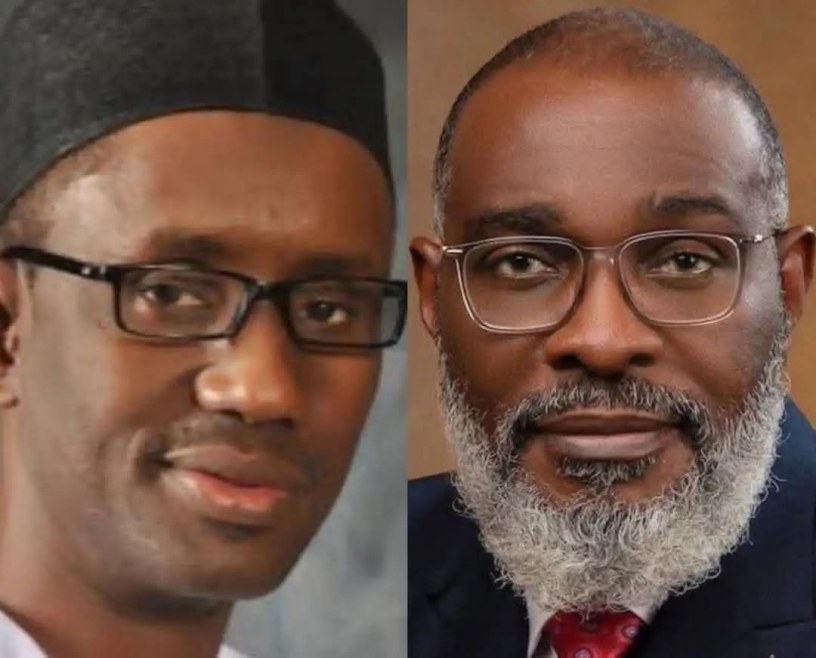

The recent appointment of a Special Adviser to President Bola Ahmed Tinubu on Homeland Security has stirred debate within Nigeria’s political and security circles. While the presidency presented the move as part of efforts to strengthen internal security coordination, many observers immediately interpreted it through the prism of power politics — particularly regarding the influence of the National Security Adviser (NSA), Mallam Nuhu Ribadu.
In Nigeria, appointments are rarely viewed in isolation. Every new office, especially within the Presidency, is often examined not only for its official mandate but also for the political signals it sends. This latest development is no exception.
The central question being asked is straightforward: Is the new Homeland Security Adviser merely an additional security aide, or is the office designed to gradually reduce the influence of the NSA?
To answer this question properly, it is important to first understand the difference between both offices.
The Office of the National Security Adviser is arguably the most powerful civilian security office in Nigeria after the President himself. Though many Nigerians assume the office is constitutionally established, it is not expressly recognised under the 1999 Constitution. Rather, it exists through presidential authority under the executive powers vested in the President.
Yet, despite lacking constitutional status, the NSA remains immensely powerful because of its strategic role in coordinating the nation’s security architecture.
The NSA supervises intelligence coordination among key agencies such as the Department of State Services (DSS), the National Intelligence Agency (NIA), the Defence Intelligence Agency (DIA), and other strategic security institutions. The office also serves as the clearing house for intelligence gathering, counter-terrorism coordination, cybersecurity strategy, and national threat assessment.
In practice, the NSA functions as the President’s chief security coordinator.
Over the years, successive administrations have expanded the office beyond mere advisory responsibilities. The NSA now plays a decisive role in inter-agency coordination, security policy implementation, foreign intelligence partnerships, and strategic national security planning.
This is why occupants of the office often become some of the most influential figures within government.
The newly created Special Adviser on Homeland Security appears different in both structure and scope.
From available information, the office is expected to focus largely on internal security coordination, intelligence integration, domestic threat management, and protection of critical national infrastructure. In many ways, the concept mirrors aspects of the United States Department of Homeland Security, which concentrates more on domestic safety and internal stability than broad national defence strategy.
On paper, therefore, the Homeland Security Adviser appears subordinate to the NSA structure rather than superior to it.
However, politics is often shaped less by official organograms and more by access to power.
Within presidential systems, influence is determined by proximity to the President, control of information flow, and the ability to shape decisions before they are made. In that regard, the creation of another high-level security advisory office inevitably introduces an alternative channel of security consultation within the Presidency.
That alone has implications.
Even if the new office does not formally weaken the NSA, it reduces the possibility of security advisory monopoly around a single individual. It also creates room for parallel intelligence interpretation and policy recommendations reaching the President from different directions.
This may well be intentional.
Nigerian presidents historically prefer overlapping power structures within government. Such arrangements create internal checks, prevent excessive concentration of influence, and ensure that no single appointee becomes politically indispensable.
This pattern is visible across administrations: Chief of Staff versus Secretary to the Government of the Federation; ministers versus presidential task forces; service chiefs versus intelligence coordinators; and now potentially, NSA versus Homeland Security Adviser.
Seen from this perspective, the appointment may not necessarily signal a direct loss of confidence in Nuhu Ribadu. Rather, it may indicate President Tinubu’s preference for a more fragmented security advisory system where multiple actors compete to provide solutions and intelligence assessments.
Still, it is important to separate political interpretation from institutional reality.
Institutionally, the NSA remains significantly more powerful.
The office retains operational coordination authority, access to classified intelligence, strategic oversight over security institutions, and international security relevance. No Homeland Security Adviser can presently match that level of institutional reach unless the President deliberately transfers substantial powers to the office over time.
Yet symbolism matters in politics.
The establishment of a Homeland Security advisory office sends a message that the Presidency is not entirely comfortable concentrating security coordination around one office alone. Whether this represents strategic diversification, bureaucratic expansion, or quiet internal balancing remains to be seen.
What is certain, however, is that the development once again highlights a recurring feature of Nigerian governance: some of the most influential offices in the country are not created by the Constitution but by presidential confidence and political necessity.
In Nigeria, power often resides less in constitutional text and more in proximity to the centre of authority.
Abdul Kezo IkonAllah
Public Relations Professional, Public Affairs Analyst, and New Media Specialist
Discover more from IkonAllah's chronicles
Subscribe to get the latest posts sent to your email.
