
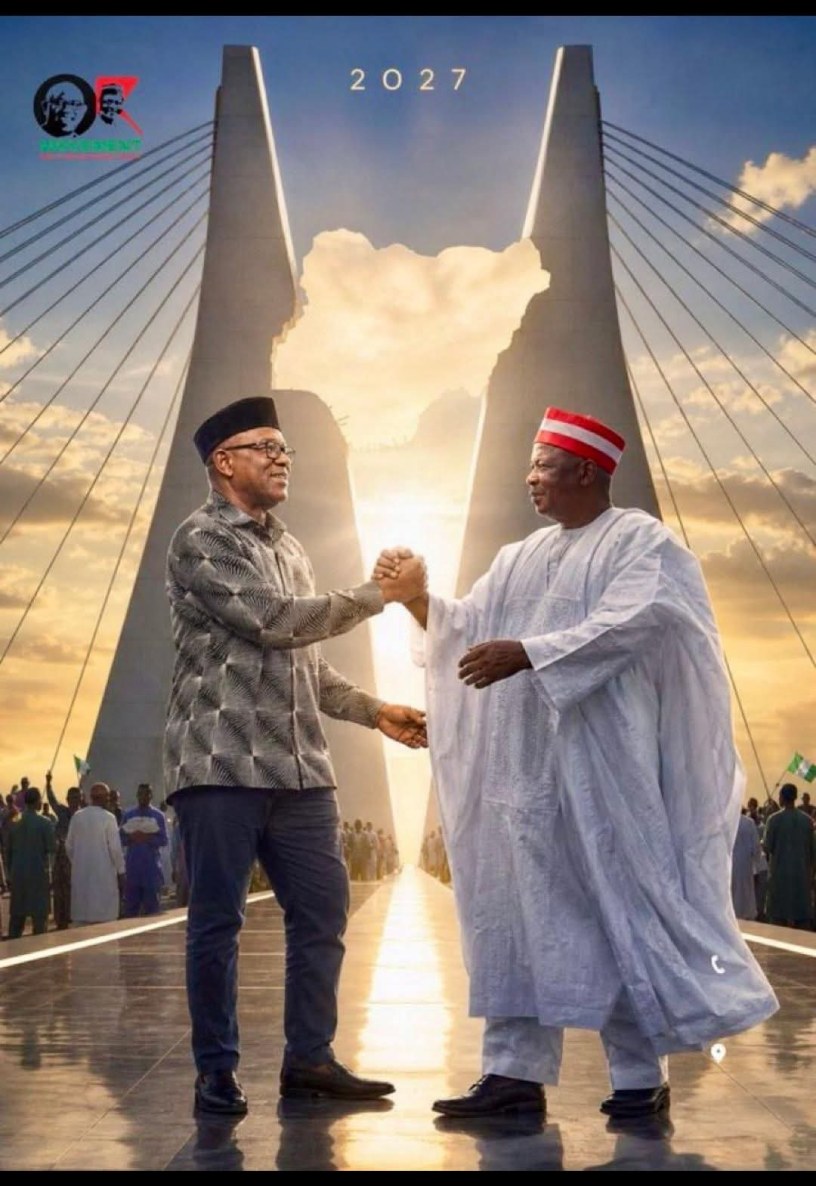
The decision by the Nigeria Democratic Congress (NDC) to zone its 2027 presidential ticket to the South while informally projecting a northern succession arrangement for 2031 is one of the clearest signs yet that opposition forces are attempting to construct a broad anti-incumbent coalition ahead of the next general elections.
On the surface, the arrangement appears politically balanced. The South retains the presidency in 2027 in line with Nigeria’s rotational power tradition, while the North receives reassurance that political power would return in 2031. But beneath the calculations lies a more complicated national question: can Peter Obi overcome the trust deficit that still exists in parts of Northern Nigeria?
For the opposition, the zoning decision is strategically important. It removes internal disputes over regional entitlement to the presidency and potentially strengthens Obi’s standing within the coalition space. By framing 2027 as the South’s turn, the NDC seeks to present Obi not simply as an Igbo candidate, but as the logical southern consensus option after the Tinubu era.
More importantly, the 2031 understanding is designed to calm northern political anxieties. Many northern elites are less opposed to southern leadership itself than they are to uncertainty over when power might return north. The NDC appears to understand this political psychology and is attempting to build what amounts to a deferred power-sharing pact.
However, zoning alone cannot resolve the deeper political challenge confronting Obi: trust.
Across sections of Northern Nigeria — particularly among conservative political elites and segments shaped by the bitter narratives of the 2023 elections — there remains suspicion about Obi’s political orientation and the ideological temperament of parts of his support base. Concerns range from fears of political exclusion to perceptions that the Obidient movement sometimes projects hostility toward traditional northern political influence.
Whether such fears are accurate is politically secondary. What matters is that they exist and continue to shape electoral behaviour.
This is why the NDC’s 2031 arrangement functions essentially as a political insurance policy to northern stakeholders. The message is straightforward: support a southern presidency in 2027, and northern succession remains protected afterward.
Yet the arrangement carries serious risks.
First, many northern voters may not fully trust the promise of power returning in 2031. Nigerian political history is littered with broken zoning agreements, elite betrayals, and shifting alliances. From the Jonathan succession crisis after Yar’Adua to the internal implosions of both the PDP and APC, political assurances in Nigeria are often treated with caution.
Second, Obi’s own supporters may resist any suggestion that his presidency should merely serve as a transitional bridge before northern reclamation of power. Many within the Obidient movement see Obi as a transformational figure rather than a rotational placeholder. Any perception of a pre-arranged one-term understanding could create internal contradictions within the coalition.
Third, the ruling APC is unlikely to allow the opposition define the narrative uncontested. The governing party will almost certainly exploit northern skepticism by portraying the NDC arrangement as opportunistic elite bargaining rather than a genuine national consensus. The trust question surrounding Obi will remain a central battlefield of the 2027 campaign.
Regionally, the implications are mixed. Obi may continue to struggle in parts of the North-West where established political structures remain dominant. However, the North-Central and sections of the North-East could become fertile ground for coalition expansion, particularly among younger voters frustrated by economic hardship, insecurity, and elite stagnation.
Ultimately, the NDC’s zoning formula reflects a broader reality of Nigerian politics: no presidential coalition can succeed without southern numbers and northern accommodation simultaneously.
The success or failure of the arrangement will depend largely on whether Peter Obi can evolve from being seen primarily as a movement candidate into a broader national consensus figure capable of reassuring both reform-minded voters and traditional political interests.
That transformation — not zoning alone — may determine whether the opposition’s 2027 calculations become a viable national project or another failed experiment in Nigeria’s complicated politics of power rotation.
By Abdul Kezo
Public Relations Professional, Public Affairs Analyst, and New Media Specialist
Discover more from IkonAllah's chronicles
Subscribe to get the latest posts sent to your email.
